
Gardner Previous Residents by Era
Different sources answer different parts of an address history. Worcester deeds establish recorded transfers. Dated directories and voting lists can preserve a historical residence clue, but they are not title records. Vital-record and archival periods add family-history context when the access rules permit it. Start with the era that matters, then keep the source wording and date beside each observation.
| Source | Years It Covers | Where Held | What It Shows |
|---|---|---|---|
| Worcester District Registry records | 1731–present | Worcester Registry and Recorded Land portal | Recorded parties, instruments, dates, legal descriptions, and prior references |
| Selected Gardner city directories | 1885–1891, 1893, 1899, 1900–1910, 1915–1921, 1923–1943, 1977 | Massachusetts State Library holdings | Printed name, address, household, business, or occupation clues for an edition year |
| Selected Gardner voting lists | 1916, 1918, 1924, 1978, 1980 | Massachusetts State Library holdings | Dated civic-list context for the listed year |
| Gardner vital-record volume | To the end of 1849 | Library of Congress digital volume | Early event and family-history clues, not current-residence evidence |
The table is a coverage map, not a promise that every address appears in every source. Printed collections can have edition gaps, and early land or family research may require manual index work and a local or state repository.
Gardner Deeds From 1731 Forward
Gardner belongs to the Worcester District Registry of Deeds, not Worcester North. Registry records run from 1731 to today. For an address history, first capture the current situs address, map-block-lot, owner spelling, and fiscal-year context from the assessor record. Then search Recorded Land by property and town, and compare the property result with party-name and prior-deed references. The image, not the result line alone, supplies the legal description and the connection to the earlier instrument.
Deeds, plans, mortgages, releases, easements, certificates, and probate instruments should be logged as separate record types. A plan may clarify lot geometry. An easement may explain a restriction. Neither automatically proves a transfer or an occupant. If the public parcel map and recorded description do not align, preserve that uncertainty instead of forcing the address into a single chain.
Note: A current owner field is a useful starting lead, while the recorded deed and its legal description support the historical title trail.
Pre-1960 Gardner Address Research
Worcester's instructions distinguish two index paths. Records after January 1, 1960 are fully indexed and searchable with index and image access. For an older Gardner transfer, open the scanned grantor or grantee index first, read the index page manually, copy the book and page, and then use Unindexed Property Search to reach the image. Supplemental surveyor indices cover 1731–1973. Name spelling and the index-page reading are part of the research, not a reason to treat a silent modern search as an absence.
The Worcester Registry search instructions show the pre-1960 grantor, grantee, and unindexed-property route.
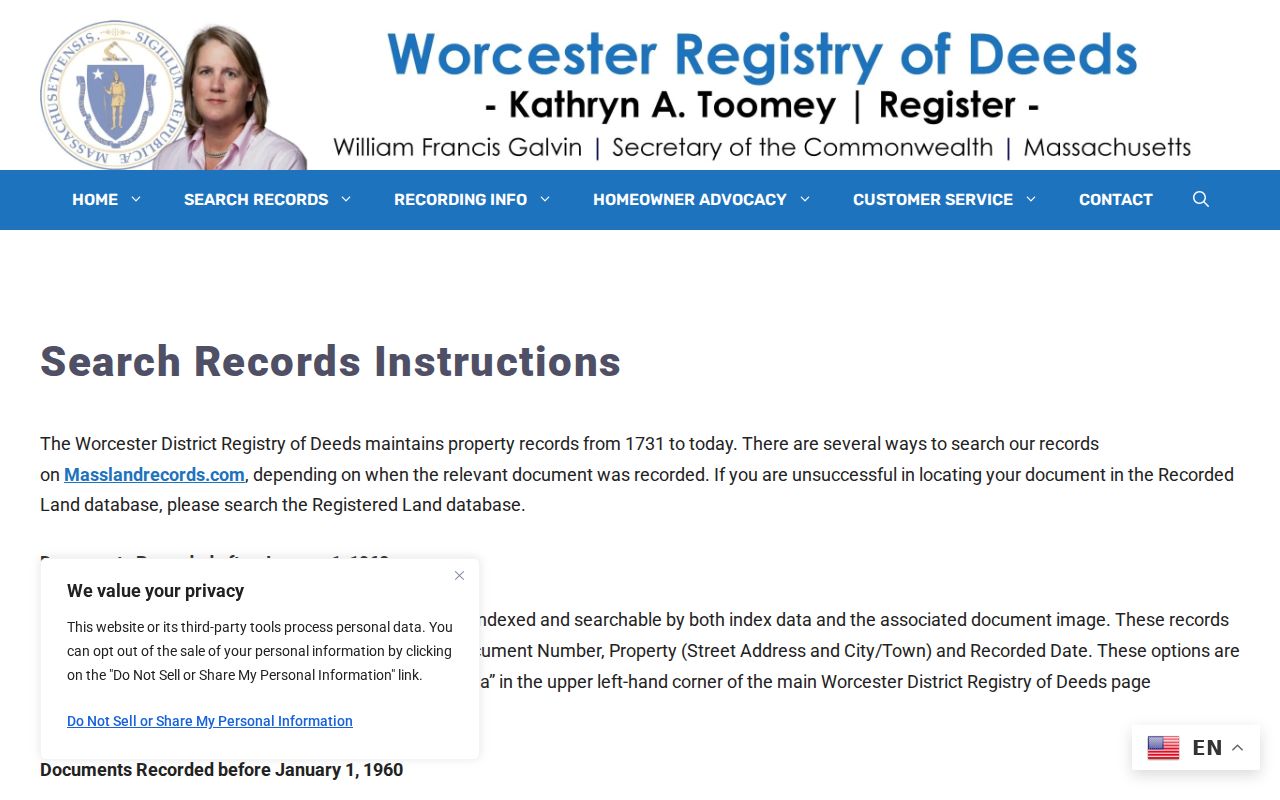
The manual workflow is especially useful when an old address no longer matches the modern parcel wording. Use the book and page, legal description, and town together before deciding that two address references describe the same land.
Trace Gardner Previous Residents Through Deeds
Follow a title chain backward from the present deed. The buyer on one deed becomes the person to search as a prior seller only after the instrument and property description are checked. This is a title method, so it identifies recorded parties and transfers rather than proving who occupied the building at every moment. Keep notes on document type, recording date, book/page or document number, and each prior-instrument reference.
- Record the current assessor parcel key, address form, owner spelling, and fiscal year.
- Locate the current purchase deed by property and town, then read its image.
- Copy the legal description and prior deed reference before searching the earlier party.
- Repeat the grantee-to-grantor sequence, keeping a dated list of instruments and any changes in the parcel description.
- Switch to the pre-1960 scanned index method when the modern search path stops.
- Grantor
- The party conveying an interest in a recorded deed.
- Grantee
- The party receiving the interest stated in that deed.
- Chain of title
- The sequence of recorded transfers and references used to trace a parcel backward.
- Legal description
- The recorded land description that can remain useful when a street number, lot line, or parcel key changes.
Gardner Previous Residents in Directories
The State Library lists selected Gardner directory runs for 1885–1891, 1893, 1899, 1900–1910, 1915–1921, 1923–1943, and 1977. Those years are holdings, not a complete claim for every year or every institution. A printed entry can show a surname, initials, household notation, occupation or employer, residence, and shorthand such as a house or room marker, depending on the edition. Copy the entry as printed and record its page and year.
The State Library directory and voting-list holdings provide the selected-year starting point. For the full collection context and how to read a printed entry, use the Gardner city directories resource rather than treating a single directory result as the whole household history.
The Levi Heywood Memorial Library listing identifies the Local History Room contact route and library hours.
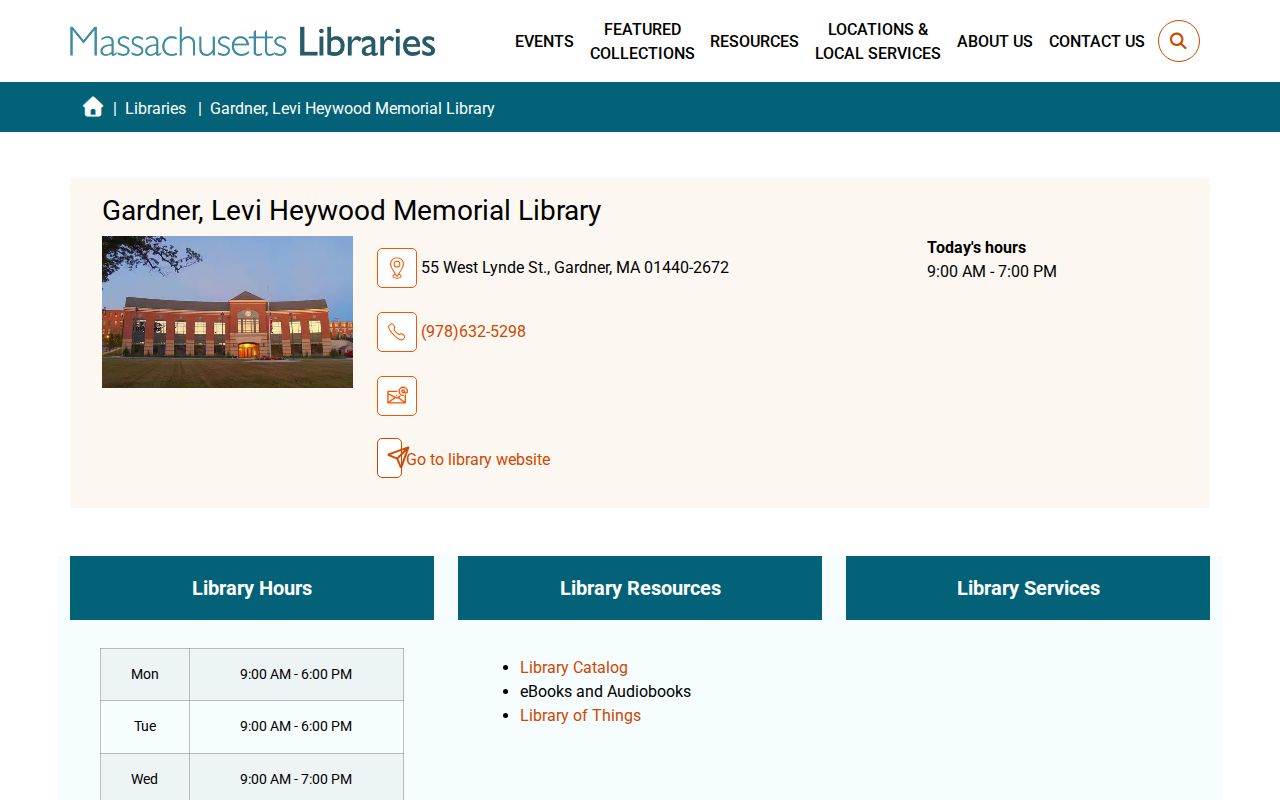
Call for Local History Room access and ask for the exact year, format, or address-oriented material needed. The official listing does not enumerate every obituary, newspaper, telephone-directory, or house-history holding, so a precise inquiry prevents assumed coverage.
Pair Gardner Directories With Census Work
Directories and a census image are different dated observations. Begin with the directory year and printed address, then find the appropriate archival census source only after checking that the relevant schedule is available for the research period. Compare names, initials, household notation, and street form cautiously. A directory can list a householder, boarder, business contact, or employer-related entry, so the two sources should not be fused into an identity claim without matching facts.
Use this process flow: printed directory year and page → normalized historic address or parcel description → verified census source for that period → separate notes for each source → a dated conclusion only where the facts agree. If the address does not appear, search adjacent directory years and spelling variants before inferring a move.
Gardner's documented English, Irish, Canadian, Russian, Finnish, Swedish, and Polish community history makes alternate spellings and transliteration variants worth recording as search variants. They remain leads until the particular record supports the match.
Gardner Previous Residents and Vital Periods
Gardner's digitized vital-record volume to the end of 1849 can add early names, relationships, and place clues. It is a historical source, not evidence that a person was ever at a specific address or remains in the city. For later statewide material, the research route changes by period: earlier local city or town sources, State Archives material for 1841–1935, and the Registry of Vital Records and Statistics for 1936 to the present.
The Massachusetts genealogy route separates those repositories and explains that RVRS has no online images for its historical research process. Birth and marriage records older than 90 years and death records older than 50 years generally have broader access, but restrictions can still apply. A local clerk can issue an event that occurred locally, subject to the governing access rule.
Use a vital record to support an event, date, relationship, or place when the source allows it. It does not replace the address-specific deed and directory trail.
Gardner Address History on Sanborn Maps
Sanborn maps add the built form around a historical address. State Library holdings list Gardner dates of March 1889, April 1895, December 1900, April 1905, November 1909, August 1914, October 1923, January 1932, and January 1932–October 1940. A map sheet can identify a street, structure, factory, business use, or neighborhood setting. It cannot establish the private people inside a building.
Gardner's 1938 hurricane and flood is a useful date anchor when comparing 1937–1940 directory entries, later deeds, and map material. Official city history reports roughly $500,000 in damage and Crystal Lake thirty inches above high-water mark. That event can prompt a focused search for documented building or household changes, but it is not proof that any particular family moved.
Note: Use a map date to frame the physical setting, then cite a separate dated source before attaching a household or ownership statement to an address.
Gardner Records Before 1785
Gardner became a separate town in 1785 from parts of Ashburnham, Winchendon, Westminster, and Templeton, and it became a city on January 1, 1923. For a family or parcel that disappears from early Gardner-oriented material, the first step may be to search the relevant parent-town records. The municipal boundary date is a records-geography clue, not evidence that a person changed residence on that date.
This earlier trail may use local town sources, Registry books, the early vital-record volume, and archival collections. Preserve the town name exactly as the historical source gives it, especially when a later address falls within modern Gardner but the older record predates the city.
Audit Missing Gardner Previous Residents
An absent directory entry is not proof of departure, death, or no connection to the address. The State Library holdings are selected years, and a printed volume can omit a person, use initials, apply a household convention, or contain an indexing error. A deed can also use a legal description with no familiar street number. Write down which year was held, searched, unavailable, or not held, and which spelling variants were tested.
The same approach applies to voting lists. Gardner selections include 1916, 1918, 1924, 1978, and 1980, but those years should not be stretched into an uninterrupted resident timeline. A careful absence audit leaves room for a new scan, a local-history finding, a different jurisdiction, or an older manual Registry index.
Gardner Previous Residents Research Limits
When a record is not online, the practical local steps are the Levi Heywood Local History Room and the Gardner Museum Resource Room. The Museum is a local-history institution with a research-request route, military corner, and Chair City oral-history exhibit. Ask for a specific item, date range, property or family topic, and source citation. A response should identify the item or curator communication used rather than treating the institution's existence as proof of an address history.
The Gardner Museum Resource Room offers the local-history context shown here.
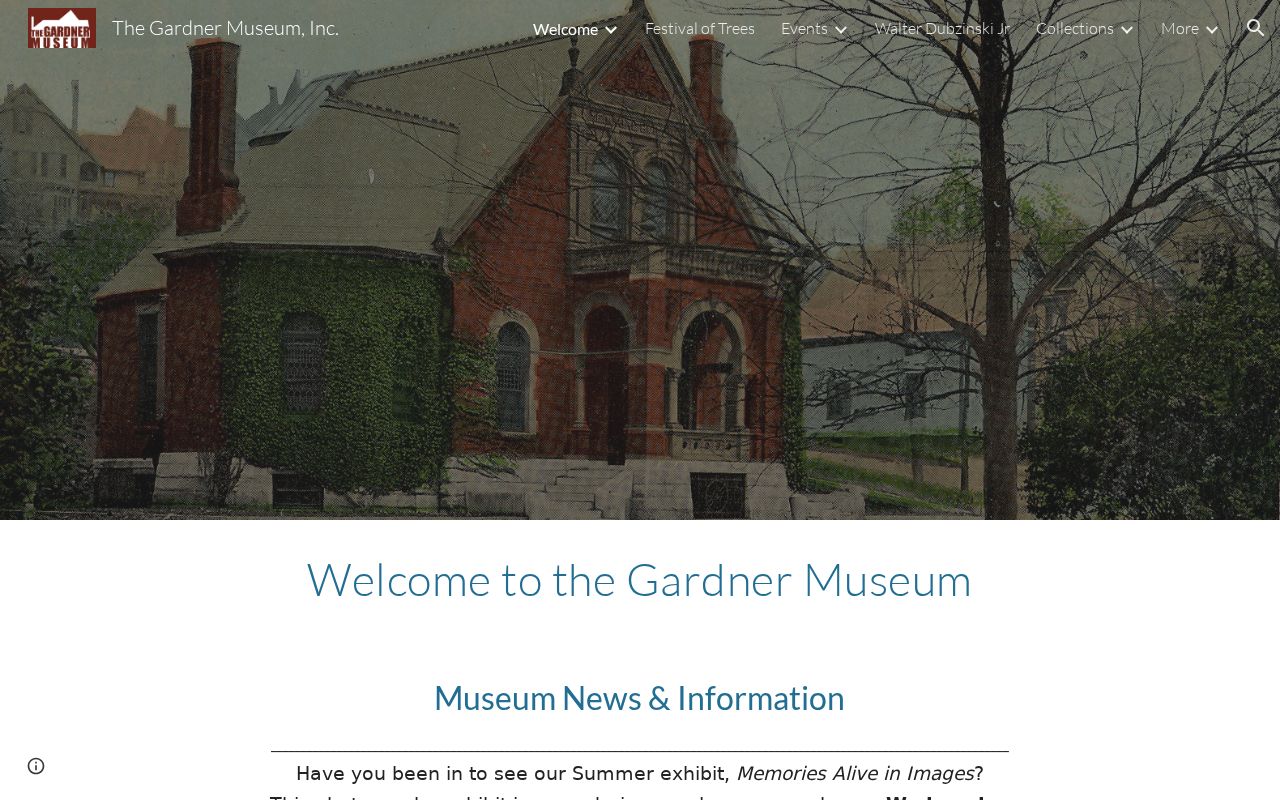
The Museum and library are useful when a scanned directory, obituary, photograph, or house-history item is not publicly indexed. They do not justify publishing a private-person roster or treating an unverified recollection as a record.