
Gardner City Directory Holdings
The State Library lists selected Gardner directory holdings rather than one unbroken run. For Gardner, Massachusetts, its list is the best starting inventory for printed name and business volumes. The separate Gardner collections below overlap in time but serve different purposes. A directory gives an alphabetic, dated entry; a voting list is a civic list for a stated year; and a catalog lead must be checked for the actual item and access conditions.
| Collection | Years | Where Held | Access |
|---|---|---|---|
| Selected Gardner directories | 1885–1891; 1893; 1899; 1900–1910; 1915–1921; 1923–1943; 1977 | Massachusetts State Library | Holdings list and collection inquiry |
| Gardner voting-list holdings | 1916, 1918, 1924, 1978, 1980; 1973 PSP Blue Book | Massachusetts State Library | Selected historic civic material |
| 1930-era Gardner directory holdings | 1927–1931 | Catalog lead | Confirm film or item access before relying on it |
| Gardner and Worcester County catalog leads | Dates vary | Catalog lead | Verify image and microfilm availability with the institution |
Those Gardner dates leave real gaps. The Gardner holdings list does not establish that every other year is missing, and it does not make a missing name proof of a move or death. Record the exact Gardner edition searched, the page if available, and any spelling variant tested before treating an absence as meaningful.
Gardner Historical Research Desk
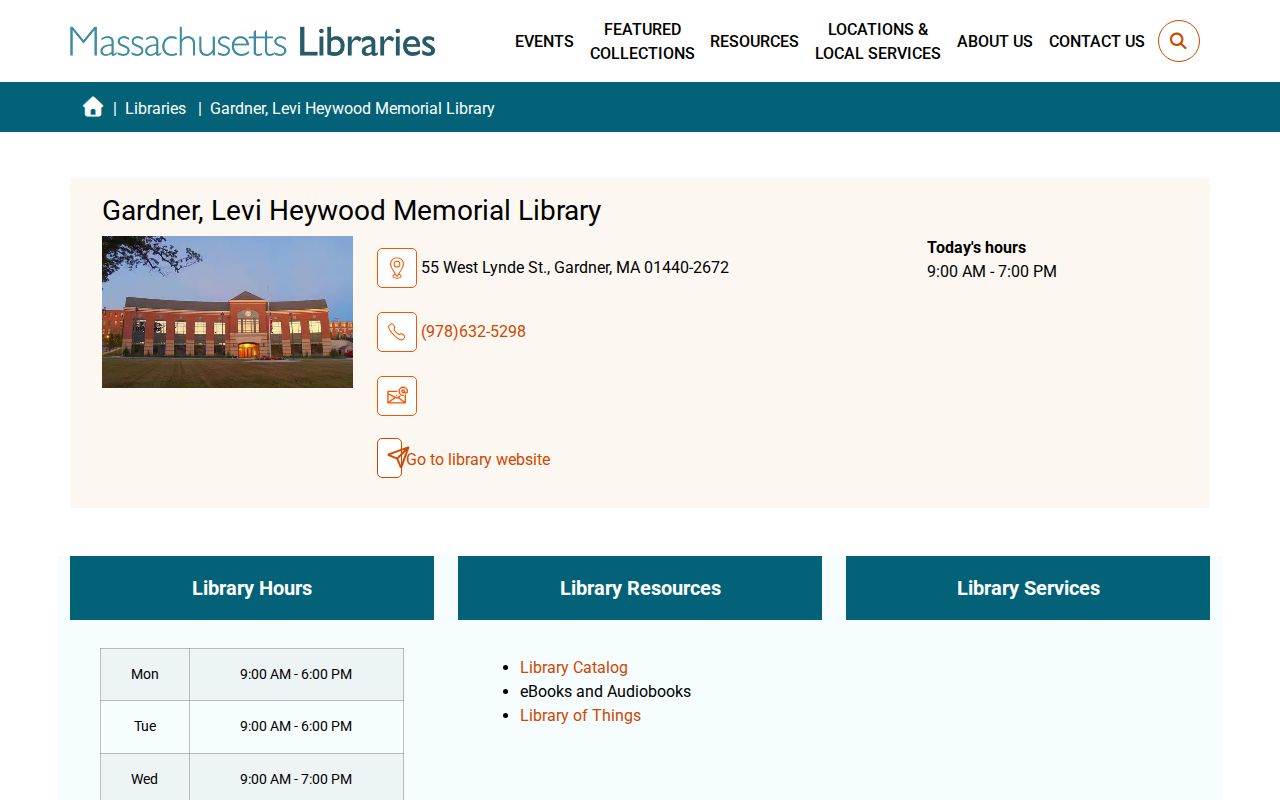
Levi Heywood Memorial Library is the local starting point when a state catalog gives a lead but not an open image. The library listing places it at 55 West Lynde Street and asks researchers to call for Local History Room access and information. Listed hours are Monday and Tuesday, 9–6; Wednesday and Thursday, 9–7; Friday and Saturday, 9–3; and Sunday closed. Its catalog is useful for checking titles before a visit.
The Levi Heywood Memorial Library listing identifies the local-history contact and catalog route for Gardner research.
Call before relying on a particular Gardner microfilm, obituary, telephone-book, or house-history run, because those exact holdings were not enumerated in the inspected official listing. A focused Gardner inquiry can give the title, edition year, format, and whether a scan, reader, or staff assistance is available. This is also the sensible local fallback when a catalog entry points to a title but does not show a searchable page image.
Reading Gardner Directory Entries
Read each printed Gardner line exactly as it appears. The State Library genealogy guidance describes directories as alphabetical personal-name and business sources, and some house guides are arranged by address. A typical Gardner entry can include a surname and initials, a spouse or household notation, an occupation, a residence, and shorthand. The edition controls the meaning of its marks, so copy the front-matter key with the entry instead of expanding an abbreviation from memory.
| Printed name | Keep initials, punctuation, and surname spelling as printed. |
|---|---|
| Household notation | Record any spouse or household wording only when the edition prints it. |
| Occupation | Preserve the stated trade or business description without adding a modern interpretation. |
| Residence | Capture the street number and street name as a dated address clue. |
| Shorthand | Use the volume’s own key for marks such as h or r, which can describe a house, room, or boarding arrangement. |
- Criss-cross section
- A street-order portion of a directory, if that edition includes one, used to find entries by address rather than alphabetically.
- Householder index
- An index that groups a household or address reference under the printed head of household.
- Abbreviation key
- The publisher’s explanation of its marks, usually found near the beginning of the volume and worth saving with a transcription.
Separate the printed Gardner entry from a later research note. A transcription may preserve the line, while a note can list the volume, year, page, and another dated source that supports or conflicts with it. That small distinction makes it possible to return to the original Gardner text when an initial, street number, or household notation needs a second look.
Gardner Voting Lists Beside Directories
The State Library also lists Gardner voting lists for 1916, 1918, 1924, 1978, and 1980, along with a 1973 PSP Blue Book. These Gardner civic records are not substitutes for an address entry. They have their own purpose, field set, and access rules. Used beside a Gardner directory year, they can help test whether a surname appears in two independent historical sources without converting either entry into a claim about present residence.
Gardner’s City Clerk links Street Lists from 2020–2025 and earlier lists, but those are also dated civic enumerations. Preserve the list year, ward or precinct when shown, and any redaction or publication limit. A direct modern record check belongs in the Gardner Resident Lookup, rather than in a historical transcription.
Tracing Gardner Households by Year
A Gardner household trail works best as a series of dated observations. Start with the first known spelling and do not merge people with similar names merely because they appear on the same Gardner street. The city’s recorded English, Irish, Canadian, Russian, Finnish, Swedish, and Polish communities also make alternate spellings and transliterations worth testing. A variant is a search lead, not a confirmed identity.
- Transcribe the earliest located entry, including its initials, address, occupation, and page or image reference.
- Check adjacent available years, noting any move, changed spelling, household wording, or missing edition.
- Compare the dated address with the relevant census period, deed, cemetery, vital, or voting-list source only where the identifying details align.
- Use a street-order section only if that edition provides one, then keep nearby names as separate records rather than assumed relatives.
- Log each year as held, searched, image unavailable, not held, or spelling variant tested, so a negative result can be reviewed later.
A name that disappears can reflect a move, a change in how the volume was compiled, an omitted edition, or a spelling change. It does not settle the reason. For a current address-keyed record trail, use the Gardner by-street directory instead of projecting an older directory line forward.
Gardner’s 1785 Record Boundary
Gardner became a separate town in 1785 from parts of Ashburnham, Winchendon, Westminster, and Templeton, then became a city on January 1, 1923. That boundary history matters when an early family or parcel stops appearing under a modern Gardner search. The prior town may hold the earlier record, even when the later address is now understood as Gardner.
- 1785: Gardner is established from portions of four surrounding towns.
- 1885: the earliest selected Gardner directory holding listed by the State Library begins.
- January 1, 1923: Gardner becomes a city.
- 1977: the latest selected Gardner directory year identified in the State Library holdings list.
Note: A timeline records collection landmarks and jurisdiction changes, not a complete publication history for every Gardner volume.
Gardner Museum Research Route
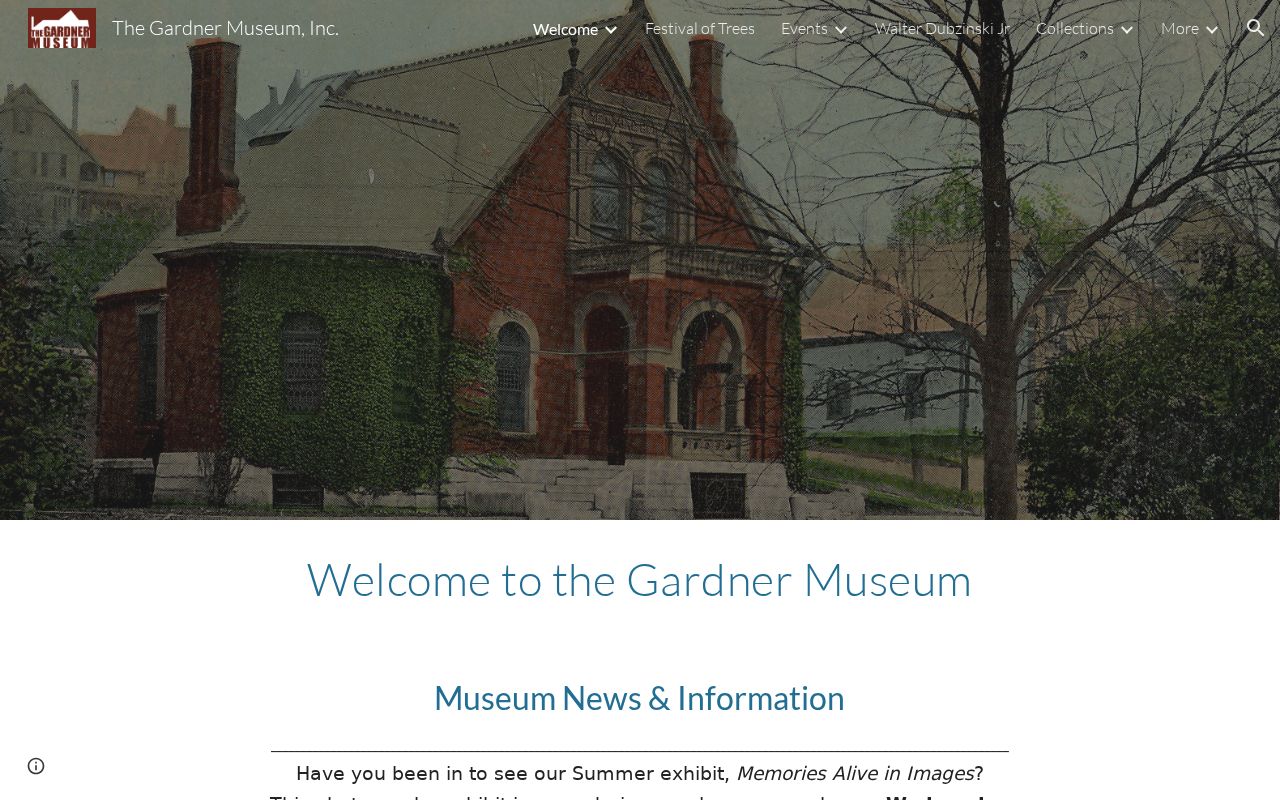
The Gardner Museum adds a local historical institution to the library and state-collection routes. At 28 Pearl Street, it describes a Resource Room, a military corner, and a Chair City oral-history exhibit. Its seasonal listing gives March through December hours of Wednesday through Sunday, 1–4, and an adult nonmember admission of $3. Confirm details before a visit, because the museum asks researchers to use its request process for local questions.
The Gardner Museum Resource Room provides a local-history research route beyond a directory catalog.
A museum response should be tied to the item, image, or curator communication actually supplied. The institution’s existence alone does not verify a particular family connection or address.
Gardner Chair City Context
Gardner’s official history explains why trade and business wording in older volumes can be especially useful context. By the mid-1800s, the city’s furniture industry included twelve companies making more than 1.2 million chairs annually. Electricity arrived in 1891, the Gardner Electric Railway began in September 1894, and the Simplex time recorder was created in 1888 before the company was organized in 1901.
Those dates can help frame a directory entry or an industrial address alongside a map, but they do not connect an individual to a company without a record that says so. The 1938 hurricane and flood, as well as the 1944 Town Hall and armory fire, are useful date anchors when a local research question needs more than one source.
Gardner Directory Absence Audit
Not every useful historical item is online. The research located no inspected official web list of exact Gardner obituary-index, newspaper-microfilm, telephone-book, or house-history holdings. A catalog result, a family-memory spelling, and an old map are all leads, not proof. Ask the Local History Room or museum for the specific format and date range, then compare the original item with the State Library list and a second dated source. If no item is available, record that as an access gap rather than describing a surname as absent from Gardner.
The State Library’s genealogy resources, the Library of Congress’s digitized Gardner vital-record volume through 1849, and the Library’s Sanborn holdings can supply companion evidence for a historical question. They cover different record types and periods. Keeping a simple Gardner source ledger protects against turning a search miss into a family conclusion. For each Gardner lead, record the source type, date, page, and exact spelling before comparing it with another item.